
How Many Glasses Can You Pour from a Bottle of Wine?
- Uncategorized
admin
- 0
- 20 minutes read
How Many Glasses Can You Pour from a Bottle of Wine?
Introduction
Have you ever stood in a store looking at a bottle of wine and wondered, “How many glasses will this actually serve?” It’s a simple question, but the answer depends on several factors, including bottle size, pour size, and the occasion. Whether you’re planning a dinner party, a wedding, or simply enjoying a quiet evening at home, understanding wine servings can help you buy the right amount and avoid running out too soon.
Wine is often compared to a good story—each bottle has a beginning, middle, and end. Knowing how many glasses you can expect from a bottle helps you enjoy that story from the first sip to the last.
Table of Contents
| Sr# | Headings |
|---|---|
| 1 | Introduction |
| 2 | Standard Wine Bottle Size |
| 3 | Standard Wine Serving Size |
| 4 | Average Number of Glasses Per Bottle |
| 5 | Why Pour Size Matters |
| 6 | Different Wine Bottle Sizes |
| 7 | Glasses in Popular Bottle Formats |
| 8 | Restaurant vs Home Wine Pours |
| 9 | Planning Wine for Parties |
| 10 | Factors That Affect Servings |
| 11 | Wine Types and Serving Differences |
| 12 | Tips for Accurate Wine Pouring |
| 13 | Common Wine Serving Mistakes |
| 14 | Quick Wine Serving Calculator |
| 15 | Conclusion |
| 16 | FAQs |
1. Standard Wine Bottle Size
The vast majority of wine sold around the world comes in a standard 750-milliliter bottle. This size has become the industry norm and is what most people think of when they picture a bottle of wine.
A standard bottle contains approximately 25.4 fluid ounces of wine. This amount serves as the basis for calculating the number of glasses available in a bottle.
Whether you’re purchasing red wine, white wine, rosé, or sparkling wine, the standard 750ml bottle remains the most common packaging choice.
2. Standard Wine Serving Size
To understand how many glasses are in a bottle, you first need to know what counts as a serving.
A standard wine serving is generally considered to be 5 ounces (148ml). This serving size is commonly used in restaurants, wine bars, and health guidelines.
Using this measurement, a standard bottle provides just over five servings.
Key Point:
- Standard bottle: 25.4 ounces
- Standard serving: 5 ounces
- Result: About 5 glasses per bottle
3. Average Number of Glasses Per Bottle
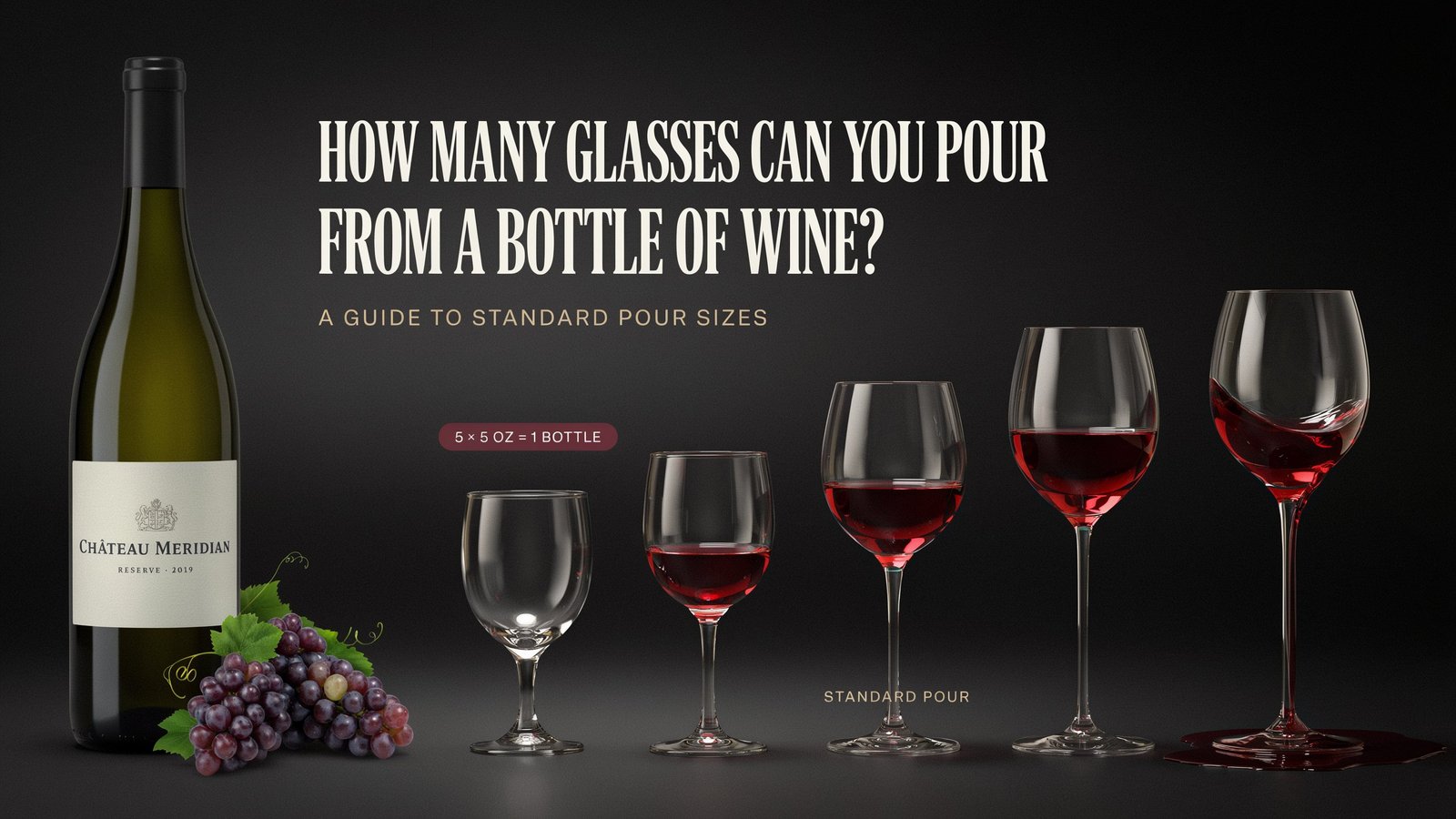
The simple answer is that a standard 750ml bottle contains five glasses of wine when poured according to standard serving guidelines.
Here’s a quick breakdown:
| Bottle Volume | Serving Size | Number of Glasses |
| 750ml | 5 oz | 5 glasses |
| 750ml | 6 oz | 4 glasses |
| 750ml | 4 oz | 6 glasses |
Because people often pour slightly more at home, many bottles end up serving only four glasses instead of five.
4. Why Pour Size Matters
Not every glass of wine is poured equally.
At a formal wine tasting, pours may be as small as 2 ounces. At a casual dinner, someone may pour 6 to 8 ounces without realizing it.
A larger pour means fewer glasses per bottle. This can significantly affect how much wine you need for an event.
Examples:
- 2-ounce tasting pour = 12 glasses
- 4-ounce pour = 6 glasses
- 5-ounce pour = 5 glasses
- 8-ounce pour = 3 glasses
This is why understanding serving sizes is so important when planning.
5. Different Wine Bottle Sizes
Wine bottles come in many sizes beyond the standard 750ml option.
Some are smaller and ideal for individual consumption, while others are designed for celebrations and large gatherings.
Common Wine Bottle Sizes:
| Bottle Type | Volume |
| Split | 187ml |
| Half Bottle | 375ml |
| Standard | 750ml |
| Magnum | 1.5L |
| Jeroboam | 3L |
| Rehoboam | 4.5L |
Each size changes the number of available servings.
6. Glasses in Popular Bottle Formats
Let’s look at how many standard glasses each bottle size provides.
Split Bottle (187ml)
A split bottle contains about one large serving or one and a half smaller servings.
Approximate glasses: 1–1.5
Half Bottle (375ml)
Perfect for couples or lighter drinkers.
Approximate glasses: 2.5
Standard Bottle (750ml)
The most common size.
Approximate glasses: 5
Magnum (1.5L)
Equivalent to two standard bottles.
Approximate glasses: 10
Jeroboam (3L)
Often seen at special events.
Approximate glasses: 20
Rehoboam (4.5L)
A large-format bottle suitable for celebrations.
Approximate glasses: 30
7. Restaurant vs Home Wine Pours
Restaurants typically follow serving standards to control inventory and maintain consistency.
At home, however, pours tend to be much larger.
A study of drinking habits has shown that many people underestimate how much wine they pour into a glass. A glass filled halfway often exceeds the standard serving size.
Restaurant Pour: 5 ounces
Typical Home Pour: 6–8 ounces
As a result, a bottle that should serve five people may only serve three or four at home.
8. Planning Wine for Parties
Knowing how many glasses come from a bottle makes party planning easier.
A common rule is that one guest will drink approximately two to three glasses during a meal or social gathering.
Small Gathering (10 People)
If guests average two glasses each:
- 20 glasses needed
- 4 bottles required
Medium Gathering (20 People)
If guests average three glasses each:
- 60 glasses needed
- 12 bottles required
Large Celebration (50 People)
If guests average two glasses each:
- 100 glasses needed
- 20 bottles required
Always consider buying one or two extra bottles as a backup.
9. Factors That Affect Servings
Several variables influence how many glasses you’ll get from a bottle.
Glass Size
Modern wine glasses are larger than ever. A larger glass often encourages larger pours.
Occasion
Formal events typically use measured pours. Casual gatherings often involve more generous servings.
Wine Type
Some wines are served in smaller amounts due to higher alcohol levels.
Personal Preference
Some people enjoy smaller pours and multiple refills, while others prefer one large serving.
These differences can significantly change serving calculations.
10. Wine Types and Serving Differences
Different wines may be served differently depending on their style and strength.
Red Wine
Usually served in 5-ounce portions.
White Wine
Typically follows the same serving guidelines as red wine.
Rosé Wine
Generally served in standard portions.
Dessert Wine
Often served in smaller 2 to 3-ounce pours due to its sweetness.
Fortified Wine
Port and sherry are usually served in much smaller quantities.
Because of these variations, some bottles can yield more servings than expected.
11. Tips for Accurate Wine Pouring
Want to make your wine last longer and ensure fair servings?
Use Measuring Tools
A simple measuring cup can help you understand what a true 5-ounce pour looks like.
Follow the Widest Part Rule
Many wine experts suggest filling the glass only to the widest point.
Practice Consistency
Consistent pours improve both presentation and planning.
Consider Wine Markers
At parties, wine markers reduce waste by helping guests keep track of their glasses.
12. Common Wine Serving Mistakes
Many people unknowingly make mistakes when serving wine.
Overfilling Glasses
Wine needs room to breathe and release aromas.
Ignoring Bottle Calculations
Underestimating servings often leads to shortages.
Serving Too Warm or Too Cold
Temperature affects taste and enjoyment.
Using Oversized Glasses
Large glasses can make servings appear smaller than they actually are.
Avoiding these mistakes helps create a better wine experience.
13. Quick Wine Serving Calculator
Use this simple reference:
| Number of Guests | Average Glasses Each | Bottles Needed |
| 5 | 2 | 2 |
| 10 | 2 | 4 |
| 15 | 2 | 6 |
| 20 | 3 | 12 |
| 30 | 2 | 12 |
| 50 | 2 | 20 |
This table can save time when shopping for gatherings and celebrations.
Conclusion
A standard 750ml bottle of wine generally contains five glasses when poured using the standard 5-ounce serving size. However, the actual number can vary depending on how generously the wine is poured, the size of the glass, and the type of event. Understanding bottle sizes and serving guidelines makes it easier to plan dinners, parties, and special occasions without guesswork. Whether you’re enjoying a quiet evening with friends or hosting a large celebration, knowing how many glasses are in a bottle ensures everyone gets to enjoy their share.
FAQs
1. How many glasses of wine are in a standard 750ml bottle?
A standard 750ml bottle typically contains five 5-ounce glasses of wine.
2. How many people can one bottle of wine serve?
One bottle usually serves two to five people, depending on serving size and drinking preferences.
3. How many glasses are in a magnum bottle of wine?
A magnum contains 1.5 liters of wine and generally serves about ten standard glasses.
4. Why do I only get four glasses from a bottle at home?
Home pours are often larger than the standard 5-ounce serving, reducing the total number of glasses.
5. Does sparkling wine have the same number of servings as regular wine?
Yes. A standard 750ml bottle of sparkling wine generally provides about five standard servings.
